
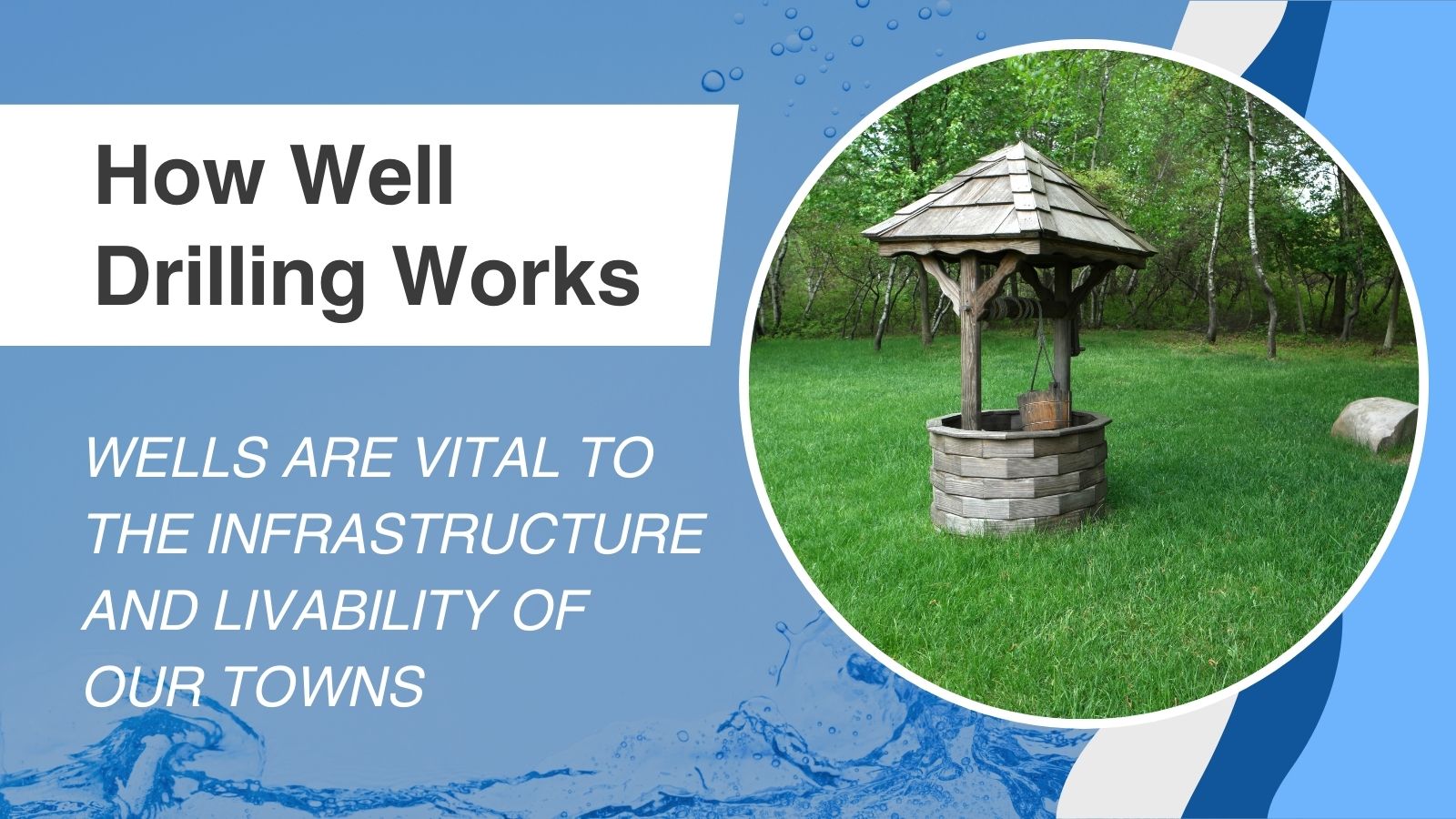
Wells are vital to the infrastructure and livability of our towns. Many places don’t have access to flowing freshwater like lakes and rivers, but there can be plenty of water located underground. Depending on where you live or the unique terrain of your property, you might have plenty of groundwater that can be accessed by a well.
But wells need to be drilled, and the process can get complicated. For well water drilling in Shelton, we recommend calling for a professional every time. But if you’d like to know why a professional is such a wise investment, then keep reading.
We’ll cover everything you might want to know about well drilling–how it works, the process behind it, and why you might want to hire someone to do it for you. If you’re new to this subject, take a look at our guide to residential drilling for an accessible overview.
Introduction to the Well Drilling Process
The well drilling process is much more than simply digging a hole in the ground—it’s a carefully orchestrated series of steps that require specialized knowledge and equipment. As a full-service drilling contractor in Washington State, we understand that every property and every water well project is unique. That’s why our team draws on decades of industry expertise to select the most effective drilling methods, such as mud rotary or air rotary drilling, tailored to the specific geology and needs of each site. From the initial planning stages to the installation and ongoing monitoring of your well, our comprehensive approach ensures that customers receive a reliable water supply that stands the test of time. Whether you’re installing a new well or maintaining an existing one, our professionals are committed to delivering quality results at every stage of the drilling process.
Site Selection and Planning for Water Wells
Choosing the right location for your new well is one of the most important steps in the well drilling process. Our team begins with a thorough site visit, carefully evaluating the property’s geology, topography, and environmental conditions. This assessment allows us to develop a comprehensive plan that addresses all relevant factors, from preventing well collapse to minimizing the risk of contamination. By selecting the most suitable drilling method for your site and considering the unique characteristics of your property, we ensure that your well is installed in the optimal location. This attention to detail not only helps control costs but also guarantees a safe, long-lasting water supply for our customers.
Regulations and Permits in Washington State
Before any drilling begins, it’s essential to navigate the regulations and permits required in Washington State. Our team is highly experienced in managing the permitting process, working closely with local authorities to ensure full compliance with all environmental and water quality standards. We make certain that our drilling methods and equipment meet or exceed regulatory requirements, protecting both your water supply and the surrounding environment. By handling these important legal and procedural steps, we help our customers avoid delays and ensure that every well is drilled safely, responsibly, and in accordance with state and county guidelines.
Well Drilling: How It Works
Accessing the groundwater beneath your feet can be tricky. It’s there, either in a large space or soaked up in the ground and ready to flow to wherever there’s space. The goal of well drilling is to drill down and find an aquifer or water source below the ground. If you want a step-by-step breakdown, see how well drilling works. Well drilling creates a borehole, which is a narrow, deep hole drilled into the earth to access groundwater.
We need to keep drilling even when we reach the aquifer below the surface. Modern drilling techniques utilize long drill shafts and specialized drill bits, such as tricone bits or PDC bits, to penetrate various geological formations, with the choice of drill bit depending on the ground conditions. This allows the water to continue to flow downward into the well that gets set up so you have access to fresh water for a long time. Drill cuttings and other materials are produced during drilling and must be managed. Mud rotary drilling is an efficient method that uses the injection of drilling fluid to maintain borehole stability and remove produced cuttings. Air rotary drilling and rock drilling are also used depending on the geology, with rock drilling necessary for penetrating solid rock formations. The drilling process uses rods to drive the drill bit deeper into the ground. The effectiveness of different drill bits and drilling methods has improved with technological advancements, resulting in better durability and higher rates of penetration.
The Science of a Well Drill
Drills are not how they were in the old days. If you think a company is coming to your property with a simple little hand-crank drill to build you a well, then you might want to think again!
Drilling rigs are large and built with incredibly powerful machinery that can bore down into the earth and break apart dirt, rocks, gravel, and other kinds of material. The evolution of drilling technology has a long history—records show that the earliest well drilling dates back to 347 AD in China, and by the 1st century BC, deep well drilling machines were already being used for brine production.
There is also usually machinery that carries soil to the surface since it needs to be displaced in order for the well to exist. Well drilling can be done either manually or mechanically, with equipment ranging from simple hand tools to sophisticated rigs, depending on the business and site requirements. Modern well drilling businesses rely on advanced technology and professional expertise to ensure successful well development.
We move the soil somewhere else so there’s a deep hole that can be filled with water and thus starts the beginning of your well’s lifespan! Reliable water wells are essential for supporting animals and agriculture, as livestock and farm operations depend on a consistent water supply. The development of a well system is crucial for long-term water quality and flow, and professional planning and development ensure the well meets the needs of both residential and agricultural users.
Casing, Filters, and Pumps
Drilling can often be the most time-consuming and difficult part of this process, but once it’s done, there are still some things to do. We need to case the well so it doesn’t collapse in on itself. For additional advice on what a contractor can offer during this phase, check out these well drilling tips here. The well is lined with casing to prevent collapse and contamination, and grouting is used to seal the annular space between the casing and the borehole wall. Remember–there is a lot of heavy soil around the exterior of your well that could fall into it without a barrier to stop it. This can be made of plastic or steel, but it helps keep the structural integrity of your well intact.
A well system includes the casing, filters, pumps, and other components, all working together to ensure reliable operation and high water quality. Well development is a crucial step after drilling and casing, as it improves water quality and flow by removing fine particles and enhancing water movement into the well.
Then, we focus on testing your water to ensure it’s clean and install a filter if it’s needed. A licensed technician should conduct water analysis and ensure compliance with safety standards. This can give you the delicious, fresh, and clean water you’re used to. And finally, we can work to install an electric pump that pushes the water from the ground right into the fixtures of your home so you can continue living your life.
To make sure your contractor is properly licensed, contact your state’s Department of Natural Resources or Department of Health. Licensed contractors have passed tests and met specific professional requirements to obtain their license.
All of this work is time-consuming, physically demanding, and even dangerous depending on the equipment at your disposal. We always recommend investing in professional services from the first step to the last, to ensure you get the best water possible.
Maintenance and Repair of Existing Wells
Keeping your water well in top condition requires regular maintenance and prompt repairs. Our team offers a full range of services designed to maximize the performance and lifespan of your well, including pump maintenance, pressure tank inspections, and casing repairs. We also provide ongoing monitoring to catch potential issues early, helping you avoid costly repairs and interruptions to your water supply. With our expertise and commitment to quality service, you can trust that your well will continue to deliver clean, reliable water for years to come.
Challenges and Considerations for Drilling Contractors
Drilling water wells presents a unique set of challenges that require both experience and adaptability. As a professional drilling contractor, we encounter a variety of geological conditions, from hard rock formations to unstable soils, each demanding a specific drilling method and specialized equipment. Environmental considerations are also paramount—we take care to protect nearby water sources, wildlife habitats, and prevent contamination throughout the drilling process. Our team carefully weighs factors such as cost, depth, and site-specific obstacles to develop the most effective plan for each project. By relying on our expertise and dedication to high standards, customers can be confident that their well drilling project will be completed safely, efficiently, and with lasting results.
Schedule an appointment with American Pump and Drilling today!
Frequently Asked Questions
Question: How does the well drilling process work?
Answer: Well drilling works by using powerful drilling rigs to bore deep into the ground until an underground water source, called an aquifer, is reached. The drilling equipment breaks through soil, rock, and gravel while removing debris. Once water is found, the well is reinforced and prepared for safe water extraction.
Question: What are the main steps involved in drilling a water well?
Answer: The typical well drilling process includes site assessment, obtaining permits, setting up the drilling rig, drilling down to the aquifer, installing casing and screens, and testing the water supply. Each step ensures the well produces clean, reliable water and remains structurally stable for long-term use.
Question: Why do well drilling projects require professional equipment?
Answer: Professional well drilling requires heavy-duty machinery because the drill must cut through various underground materials such as dirt, rock, and gravel. Specialized rigs, drill bits, and removal systems help excavate the borehole safely while maintaining stability and preventing collapse during the drilling process.
Question: How deep does a water well usually need to be drilled?
Answer: The depth of a water well depends on local geology and the depth of the aquifer in the area. Some wells may be only a few dozen feet deep, while others can reach hundreds of feet underground. Professionals analyze geological data to determine the optimal drilling depth.
Question: What happens after a well is drilled?
Answer: After drilling reaches the aquifer, workers install casing to stabilize the hole and prevent contamination. A screen may also be added to filter out sediment. Finally, the well is tested for water flow and quality before pumps and other equipment are installed.